By the person running the warehouse and the paperwork inside a working commercial catering equipment service business — not a software company guessing what the job needs.
Racking installed, whole runs with no labels, stock on the floor: a real warehouse in a real state. The software had to work with that warehouse as it was, not after a weekend of tidying first. That constraint became the product's spine — and the warehouse is still the flagship.
Inside the Warehouse →
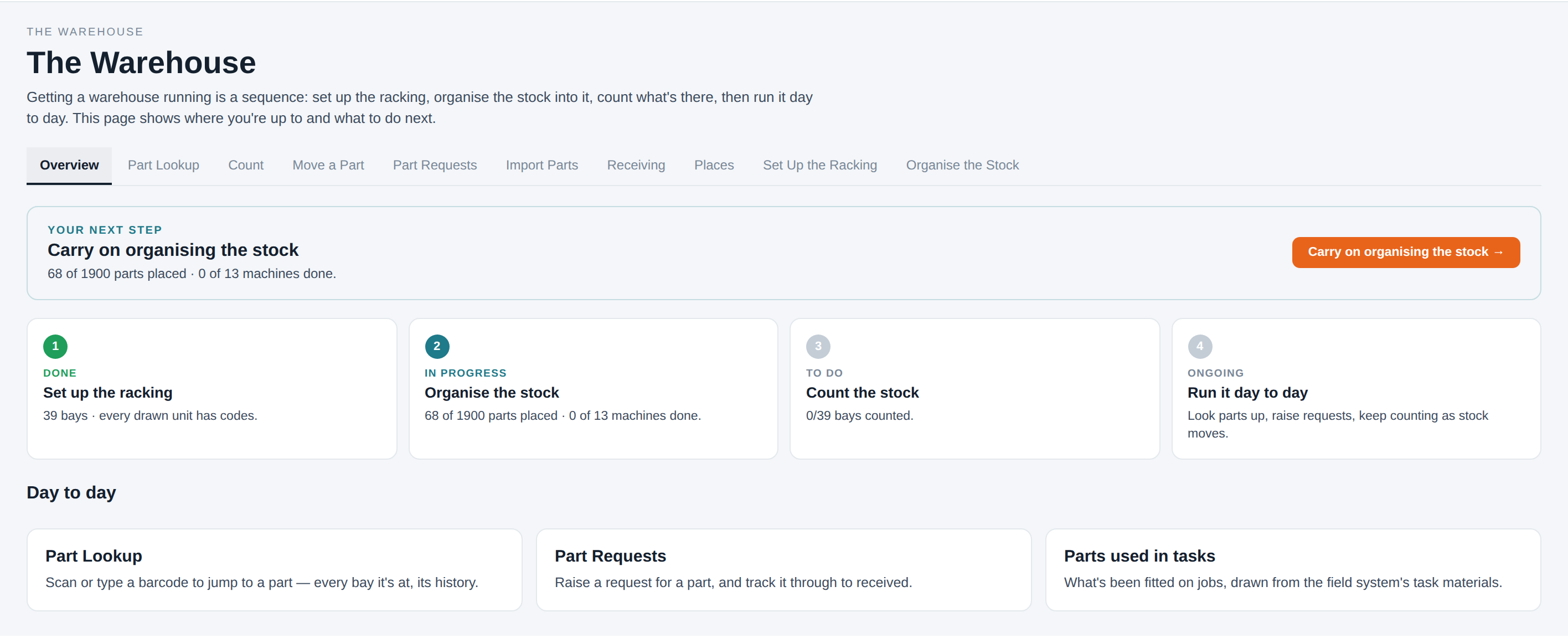
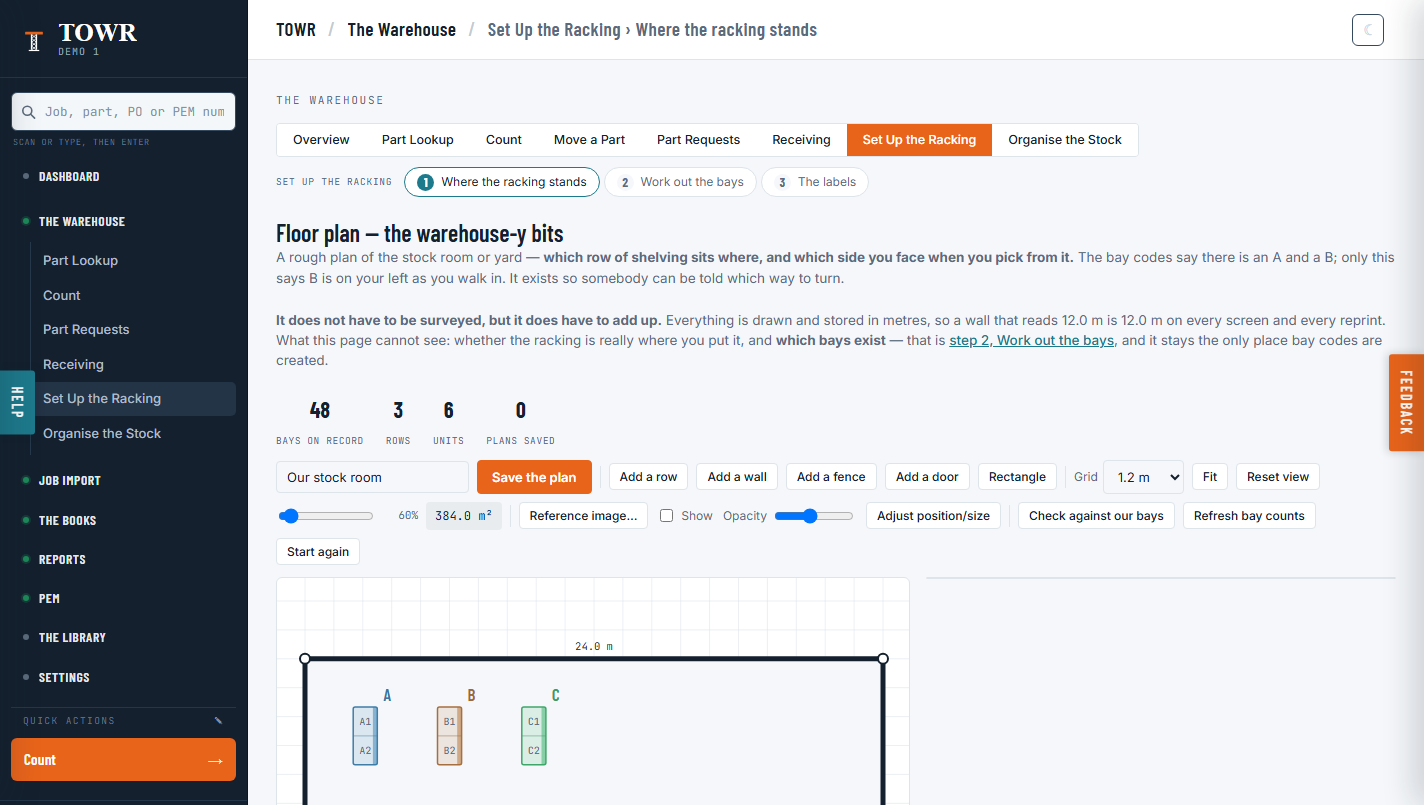
A technician needing to know what was actually on the truck. A storeman needing to count without re-typing a serial by hand. An office manager needing to see finished work that still wasn't invoiced. The Warehouse, PEM and The Books all trace back to a week like one of those — not a whiteboard.
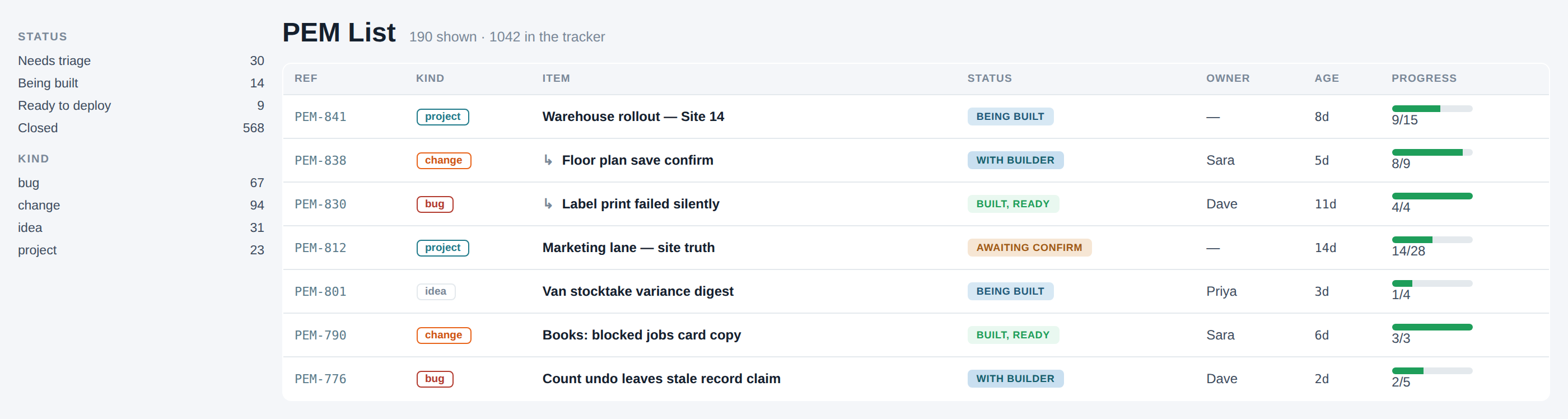
Development of the product is tracked in PEM, the project's own tracker — so every rough edge gets found by us before it gets found by you. One change to the stock screen alone went through dozens of rounds of correction before it shipped, and that history stays visible on the ticket rather than smoothed over afterwards.
When TOWR doesn't know something — a count, a connection, a capability — it says so. That goes for this website too.
Inside PEM →
Guided flows speed the day — they don’t lock the doors. The full rule, and how it shows up across the product, is on Why us.
Why us →
TOWR is Tasking, Operations, Warehousing and Reporting — the work that has to stay upright on a real site. The plate is the kind of sign that hangs on the fence; the crane is what actually lifts. That's the name and the mark. Nothing more mystical than that.
Talk to the people who built it, or go straight into the product.